Best Pokémon Game: The Ultimate Expert Guide to Finding the Perfect Trainer Experience


Discover the best Pokémon game ever with expert comparisons, gameplay analysis, strategic depth insights, and fan favorites. Explore which Pokémon title truly delivers the ultimate trainer experience.


Finding the best Pokémon game is a debate that never truly ends—and that ongoing discussion is part of what keeps the franchise alive. For more than two decades, Pokémon has evolved far beyond simple monster collecting. It has grown into a layered ecosystem of strategy, storytelling, competitive depth, emotional nostalgia, and world exploration.
When players search for the best Pokémon game, they are rarely just asking for a title. They are searching for the most complete experience—the game that respects their time, rewards strategic thinking, and recreates that magical feeling of becoming a Pokémon Trainer. Some players want deep competitive mechanics. Others want emotional storytelling. Many simply want a timeless adventure that still feels meaningful years later. This guide explores all of these dimensions so you can confidently determine which Pokémon game truly stands out.
What Makes a Pokémon Game Truly the Best
A Pokémon game becomes legendary not because of one feature, but because of synergy. Gameplay systems, world design, pacing, creature variety, soundtrack, and progression must all feel cohesive. The best Pokémon game achieves balance rather than chasing perfection in one area.
Replay value is one of the strongest quality indicators. A great Pokémon title invites you back years later with new strategies, different team builds, and fresh discoveries. Strong post-game content, meaningful team customization, optional challenges, and battle depth ensure longevity beyond the main storyline.
Accessibility also plays a critical role. Pokémon has always welcomed newcomers, but elite entries respect veteran players as well. Difficulty balance, competitive mechanics, and thoughtful quality-of-life systems help create a game that grows with its audience instead of limiting it.
The Emotional Power of the Pokémon Journey
The reason the debate over the best Pokémon game never fades is simple: emotion. Pokémon is not just about stats and type matchups. It is about memories—choosing your first starter, facing a tough gym leader, or winning a battle you were sure you would lose.
Games that give players room to breathe emotionally tend to leave the strongest impressions. When pacing allows moments to settle instead of rushing forward, bonds between trainer and Pokémon feel authentic. These experiences shape long-term attachment.
Storytelling has also become more refined over time. Even simple narratives can become powerful when supported by compelling rivals, morally complex villain teams, and culturally distinct regions. Emotional resonance often separates a good Pokémon game from the best Pokémon game.
Classic Era Pokémon Games and Their Lasting Influence
The classic generation of Pokémon titles established the formula that still defines the series: turn-based combat, elemental strategy, exploration, and team synergy. For many fans, these early games represent the best Pokémon game era because they captured the franchise in its purest form.
Simplicity created depth. Limited resources, minimal guidance, and challenging gym battles forced players to think strategically. Exploration felt rewarding because nothing was handed to you.
Even today, modern mechanics are built on the foundation of those early titles. The enduring relevance of type balance, EV training concepts, and battle prediction systems proves how well those foundations were designed.
Modern Pokémon Games and Evolving Design Philosophy
As technology advanced, Pokémon shifted toward larger regions, cinematic presentation, and player-friendly mechanics. Modern entries emphasize accessibility, smoother gameplay, and immersive environments.
Quality-of-life features such as streamlined breeding, easier team adjustments, and faster battle animations reduce friction. This broadens appeal and welcomes new generations of players into the franchise.
However, experts often debate whether convenience reduces challenge. The best Pokémon game in the modern era is typically one that balances innovation with strategic depth—offering ease of access without removing meaningful difficulty.
Open World Exploration and Player Freedom
Recent Pokémon titles have experimented with open-world exploration, allowing players to encounter creatures in dynamic, living habitats. This evolution aligns closely with how many fans imagined the Pokémon world as children.
Open environments create immersion. Watching Pokémon roam naturally, choosing your adventure path, and exploring regions without strict linear constraints increase agency and personalization.
Yet freedom requires structure. Without meaningful progression systems, open worlds can feel empty. The strongest Pokémon entries combine exploration with guided objectives, ensuring that discovery always feels rewarding.
Competitive Battling and Strategic Depth
For advanced players, competitive play defines the best Pokémon game. True mastery involves understanding IVs, EVs, natures, move synergy, predictive switching, and team composition strategy.
Games that make competitive training accessible without excessive grinding tend to earn high praise. Respecting player time while maintaining strategic complexity enhances long-term engagement.
Importantly, competitive depth should remain optional. Casual players can enjoy the story while competitive players dive into layered mechanics. This dual appeal strengthens overall design.
Storytelling and World Building
Pokémon stories may appear simple on the surface, but effective world building creates memorable regions. Distinct cities, regional myths, rival arcs, and villain motivations add dimension.
The best Pokémon game often features a rival who grows alongside you rather than serving as a static obstacle. Emotional stakes make victories feel earned.
Subtle storytelling—environmental details, NPC dialogue, cultural themes—often carries more impact than long exposition. Strong world building makes the region feel alive beyond battles.
Visual Style and Artistic Direction
Graphics technology changes over time, but artistic direction determines longevity. A cohesive visual identity ages far better than raw technical ambition.
Color palettes, character design, animation fluidity, and environmental detail all shape atmosphere. Charm and clarity often matter more than realism.
The best Pokémon game aligns visual style with gameplay tone, ensuring exploration, battles, and story moments feel unified rather than disjointed.
Music and Sound Design
Music is one of the most powerful emotional anchors in Pokémon history. Route themes, gym battle music, and champion soundtracks create long-lasting memories.
Adaptive soundtracks enhance immersion. Calm music encourages exploration, while intense battle tracks amplify tension and adrenaline.
Subtle audio feedback—Pokémon cries, menu sounds, environmental ambiance—adds polish. A strong soundtrack can elevate even simple gameplay moments into unforgettable experiences.
Comparing Pokémon Game Styles
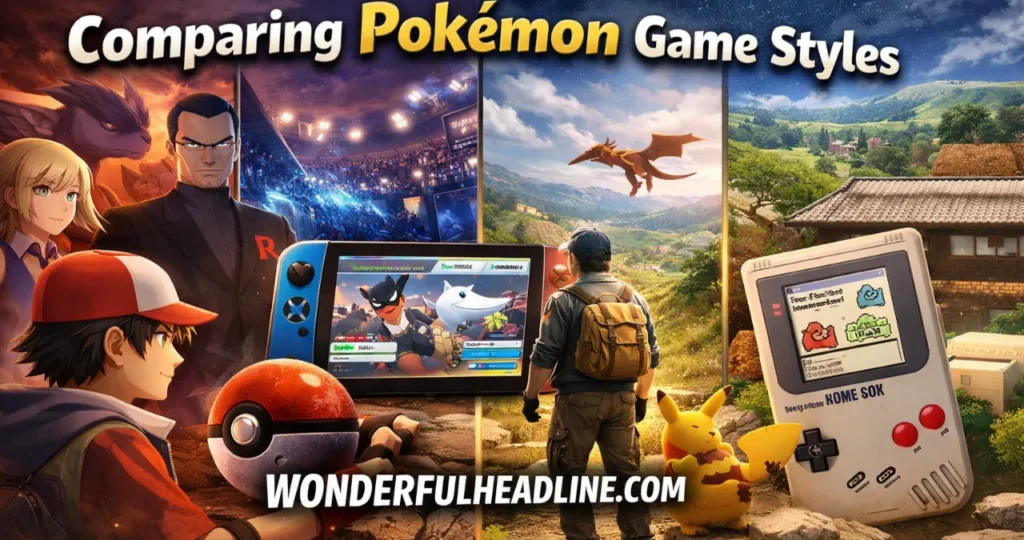
Different Pokémon games excel in different areas. Understanding your preference helps determine which could be the best Pokémon game for you.
| Style Focus | Core Strength | Ideal For |
|---|---|---|
| Story Driven | Character arcs and narrative | Emotional immersion |
| Competitive Focused | Battle depth and balance | Strategy enthusiasts |
| Exploration Heavy | Open regions and discovery | Adventure seekers |
| Nostalgia Focused | Classic mechanics | Long-time fans |
No single style dominates universally. Preference often depends on what a player values most.
Why Nostalgia Shapes the Debate
Nostalgia significantly influences perceptions of the best Pokémon game. The first title a player experiences often becomes emotionally elevated.
Psychologically, nostalgia enhances positive memories and softens flaws. This does not invalidate opinions, but it explains passionate debates within the community.
Modern entries frequently reference older generations, blending legacy elements with new mechanics to maintain continuity.
Accessibility and Player Experience
A truly great Pokémon game welcomes newcomers without oversimplifying systems. Clear tutorials and intuitive mechanics reduce friction.
At the same time, optional complexity—advanced breeding mechanics, competitive training systems, and endgame challenges—ensure veterans remain engaged.
The best Pokémon game achieves this balance, expanding its audience while respecting long-time fans.
Multiplayer and Community Engagement
Trading, battling, and cooperative features transform Pokémon from a solo adventure into a shared experience.
Online tournaments, ranked ladders, seasonal events, and raid battles extend longevity. A strong community ecosystem strengthens a game’s cultural impact.
Multiplayer balance and fairness are critical. Clear rules and competitive integrity create positive long-term engagement.
Innovation Versus Tradition
Pokémon thrives on evolution without abandoning identity. Radical change risks alienating fans, while stagnation risks irrelevance.
The best Pokémon game typically introduces incremental innovation—adding mechanics that enhance rather than replace core systems.
Tradition provides continuity. Familiar battle mechanics and recognizable creatures anchor new entries within the broader franchise journey.
Cultural Impact of Top Pokémon Games
The strongest Pokémon games influence merchandise, anime arcs, competitive tournaments, and broader pop culture.
Iconic Pokémon species, unforgettable champions, and legendary battle themes become part of gaming history.
Games widely considered the best Pokémon game often leave a lasting cultural footprint far beyond their initial release.
Personal Preference Versus Objective Design
Personal enjoyment and objective design quality are not the same—but both matter.
A player may emotionally connect to one generation, while analysts evaluate balance, pacing, and mechanical depth.
The most respected Pokémon titles typically satisfy both criteria: strong design fundamentals and powerful emotional resonance.
Frequently Asked Questions
What is the best Pokémon game for beginners?
Titles with strong tutorials, quality-of-life improvements, and forgiving progression are ideal starting points.
Is the best Pokémon game the same for everyone?
No. Preferences vary based on nostalgia, competitive interest, story expectations, and exploration style.
Do older Pokémon games still hold up today?
Yes. Many classic entries remain strong due to timeless mechanics and balanced design.
Are modern Pokémon games easier?
They are more accessible, but competitive depth and optional challenges still provide difficulty.
How do I choose the best Pokémon game for me?
Identify whether you prioritize strategy, storytelling, exploration, multiplayer, or nostalgia.
Final Verdict
The best Pokémon game is not a single universal answer—it is a reflection of what each trainer values most. Whether you seek emotional storytelling, deep strategy, open-world immersion, or classic nostalgia, Pokémon continues to deliver layered experiences across generations.
What truly defines greatness is not just mechanics or graphics, but the feeling of stepping into a world where your choices matter, your team feels personal, and every battle carries meaning. When a Pokémon game captures that feeling consistently, it earns its place among the very best.
Recommended For You : Best Pokémon Game